In 2018 the citizens of Hawaii were warned that a ballistic missile would strike the land or sea of the island in minutes. Everybody was told to get to shelter and prepare for the worst. This was during heightened tensions between the US and North Korea. People were alerted on their smartphones, radio, television and warning sirens. The message ended with a "this is not a drill". There were real consequences - people were calling their loved ones saying goodbye and preparing for what was about to come. 38 minutes later a second alert went out stating a "false alarm".
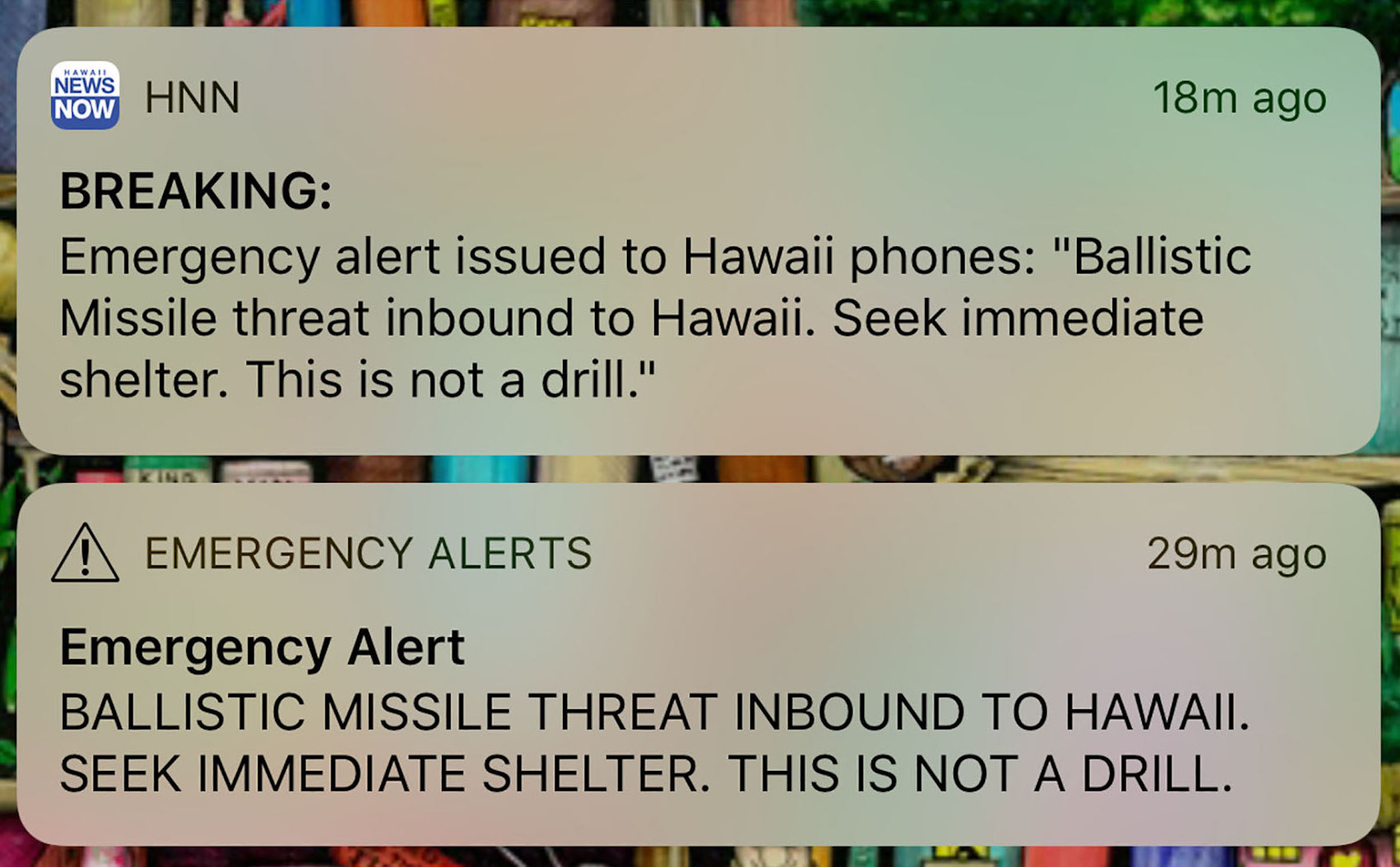
https://time.com/5102630/hawaii-false-missile-alert-procedures/
What went wrong? It turned out that the false alarm was caused by "poor computer software design" and "human factors". In the published screenshot of the computer software in question you can see the options nearly next to each other. Two different options with very different meanings, but similar wording on the same page so close to each other. It's not hard to imagine an overworked employee making this mistake.
/cloudfront-us-east-1.images.arcpublishing.com/gray/S5NCANLQXRBBFACUY4EW4T7BEY.jpg)
https://www.hawaiinewsnow.com/story/37271628/officials-release-image-of-hiema-screen-that-triggered-incorrect-missile-alert/
In the days following an investigation was launched, and the state's emergency management administrator ended up resigning. However, this was not the first or last time this happened. Only 3 days later Japan had a similar incident. It wasn't even the last time for Hawaii. The next year another false alarm was sent out to the island of Oahu.
On a lighter note, Volvo has designed an emergency brake system. With the use of cameras and a radar, the system can detect an obstacle in the road and when the driver hasn't reacted to it, the system applies the emergency brakes. It first displays a warning, but when that isn't enough or when there is no time, the system activates.

https://www.volvotrucks.com/en-en/news-stories/magazine-online/2017/jul/tech-focus-emergency-brake.html
There's cases of this system saving lives. A video exists on YouTube where a child is seen running into the road. The child appears from behind a bus in front of the Volvo truck. With no time for the driver to react, the system activates saving the child from being run into by a truck.
https://www.youtube.com/watch?v=vI9EIjUx20I
A good design can save lives. Humans are prone to make mistakes and sometimes our lives are put into the hands of the design we create. Legislators are creating stricter regulations to keep us safer and the engineers are creating technologies to do just that. A designer should know how their creation will be used and what are the possible consequences.
Sources:
https://en.wikipedia.org/wiki/2018_Hawaii_false_missile_alert
https://www.washingtonpost.com/news/the-switch/wp/2018/01/30/heres-what-went-wrong-with-that-hawaii-missile-alert-the-fcc-says/
https://www.hawaiinewsnow.com/story/37271628/officials-release-image-of-hiema-screen-that-triggered-incorrect-missile-alert/
https://time.com/5102630/hawaii-false-missile-alert-procedures/
https://www.volvotrucks.com/en-en/news-stories/magazine-online/2017/jul/tech-focus-emergency-brake.html
https://www.volvotrucks.com/en-en/news-stories/magazine-online/2017/jul/tech-focus-emergency-brake.html
https://www.youtube.com/watch?v=vI9EIjUx20I


No comments:
Post a Comment