Monday, May 2, 2022

Stephen Hawkings success as a disabled scientist (Week 14)

Stephen Hawking was an Englishman born in 1942. He was a great physicist, scientist and author among other professions. He graduated from the University of Cambridge with a PhD. In 1963 he was diagnosed with a slow-progressing disease, which deteriorated his all of his motor functions. By the end of the 1960s he had to start using a wheelchair.

https://www.hawking.org.uk/biography

If you remember social media from 2014 then you know about the Ice Bucket Challenge. It involves dumping a bucket of ice cold water on your head and then nominating your friends to do the same. This challenge was made to bring awareness to amyotrophic lateral sclerosis (ALS), also known as Lou Gehrig's disease in the US. Hawking was suffering from ALS, but couldn't take part in the challenge having suffered from pneumonia the year before. The challenge was a huge success, accumulating $220 million for the research of ALS.

Things slowly worsened for him and by 2005 he could only communicate by using his cheek muscle. A special communication device was developed with the help of Intel for him. It allowed him take notes, write books and speak with the help of text-to-speech at about one word per minute. It worked by mounting an infrared sensor to his glasses. The sensor detected his cheek movement, which would control a cursor over rows of letters, allowing him to write sentences.

https://www.hawking.org.uk/biography

The software developed for him included word prediction and auto fill to help with writing. As his disease worsened the software was updated for him. However, the disease didn't discourage him. He still went on to receive awards, go on a zero G flight, meet the US president in 2009 and have a movie made about him in 2014. He would pass away peacefully in 2018 at his home in Cambridge.

Monday, April 25, 2022

A variety of Linux distributions (Week 13)

Gentoo is a Linux distribution aimed at advanced users. The biggest advantage of Gentoo is that instead of downloading pre-built binaries from your package manager, the packages are built specifically for your computer's specs. Because of this you can squeeze more performance out of your computer than with other distributions. You could say that no two Gentoo installations are equal, because this distribution is really about customizing and tweaking things to your preference. It takes time to learn and get everything set up to your preferences, but for some that time spent is worth it. If you are not willing to put in the time to do that then you should consider something with a better out of the box experience.


For a wider audience there is Fedora Linux. It comes in different editions meant for different uses, for example for cloud computing, IoT, servers or just for personal use as a desktop OS. Fedora tries to appeal to a mass audience, with Linus Torvalds admitting that he runs Fedora on his personal machine. It is however backed by Red Hat, a multi-billion dollar company who also sponsors other big GNU projects such as LibreOffice, GNOME and systemd which might be off putting Linux purists. Also, Fedora contains non-free/proprietary firmware files which is definitely against Richard Stallman's idea of GNU.


Monday, April 4, 2022

IT security in Estonia (Week 10)

When analyzing IT security we use the "Mitnick formula" by Kevin Mitnick. It consists of three different aspects, which we will discuss here.

First is technology, that being all of the systems put up for defense, for example firewalls, antivirus software but also digital infrastructure such as the ID systems (Smart-ID and Mobile-ID). Estonia is in a good spot because a big portion of the population has adopted these systems. As of the beginning of the year 600 000 people have registered to use the Smart-ID system. 

https://blog.swedbank.ee/igapaevased-rahaasjad/smart-id-swedbanki-kontorist

Estonia has lots of opportunities to for participating in cyber security related events. Many hackathons have been organized, for example the Cyber Battle of Estonia in which young people competed in a CTF (capture-the-flag) scenario. I personally attended and ended up reaching the finals. For me it was a big learning opportunity and even if you didn't attend it still brought a spotlight on the topic of cyber security. The government also regularly informs the citizens about what attacks to look out for and how to protect yourself. Phishing is a big problem right now for Estonia, with the elderly being the most likely to fall victim to this particular attack. Businesses are also big targets in this attack for obvious reasons. And the government knows this and is doing what it can with special teams being put in place to defend the country's cyberspace, which brings us to the last aspect of the "Mitnick formula".

https://www.ctftech.com

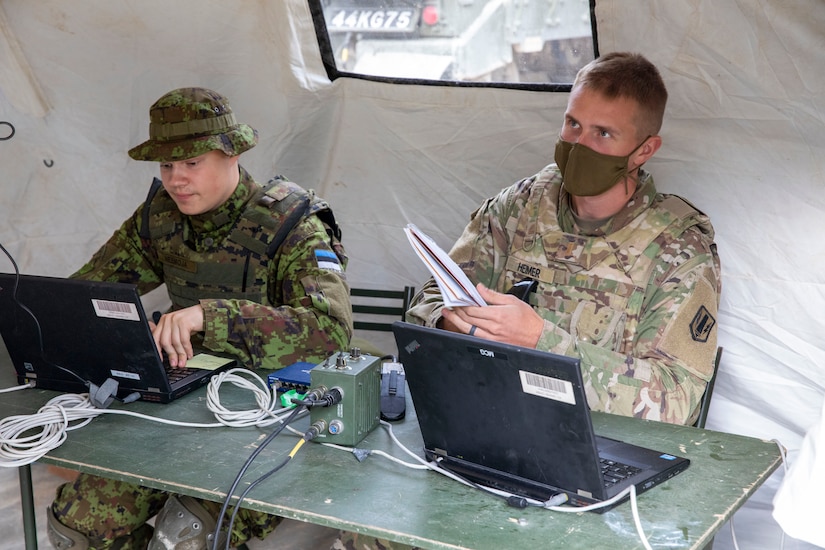
The Estonian Defence Forces Cyber Command is a branch of the Estonian Defence Forces. Their mission is to maintain control over the Estonian cyberspace, providing cyber security and acting on any threats. They are a part of the policy (and training) of Estonia's cyber defence. They have setup headquarters and a chain of command for dealing with any threats. As well as them there is the Estonian Defence League’s Cyber Unit which consists of volunteers, security professionals and lawyers. They work with the Cyber Command to build preparedness for crisis situations.

https://www.defense.gov/News/News-Stories/Article/Article/2434474/estonia-us-conduct-joint-defensive-cyber-operation/

Sources:

https://www.ria.ee/en/news/cyber-security-estonia-2020.html

https://majandus.postimees.ee/7419012/eestis-on-valjastatud-ule-600-000-smart-id

https://vm.ee/en/cyber-security

https://blog.swedbank.ee/igapaevased-rahaasjad/smart-id-swedbanki-kontorist 

https://www.ctftech.com

https://mil.ee/en/landforces/cyber-command/

https://www.kaitseliit.ee/en/cyber-unit

https://www.defense.gov/News/News-Stories/Article/Article/2434474/estonia-us-conduct-joint-defensive-cyber-operation/

Monday, March 28, 2022

Usability in IT with real consequences (Week 9)

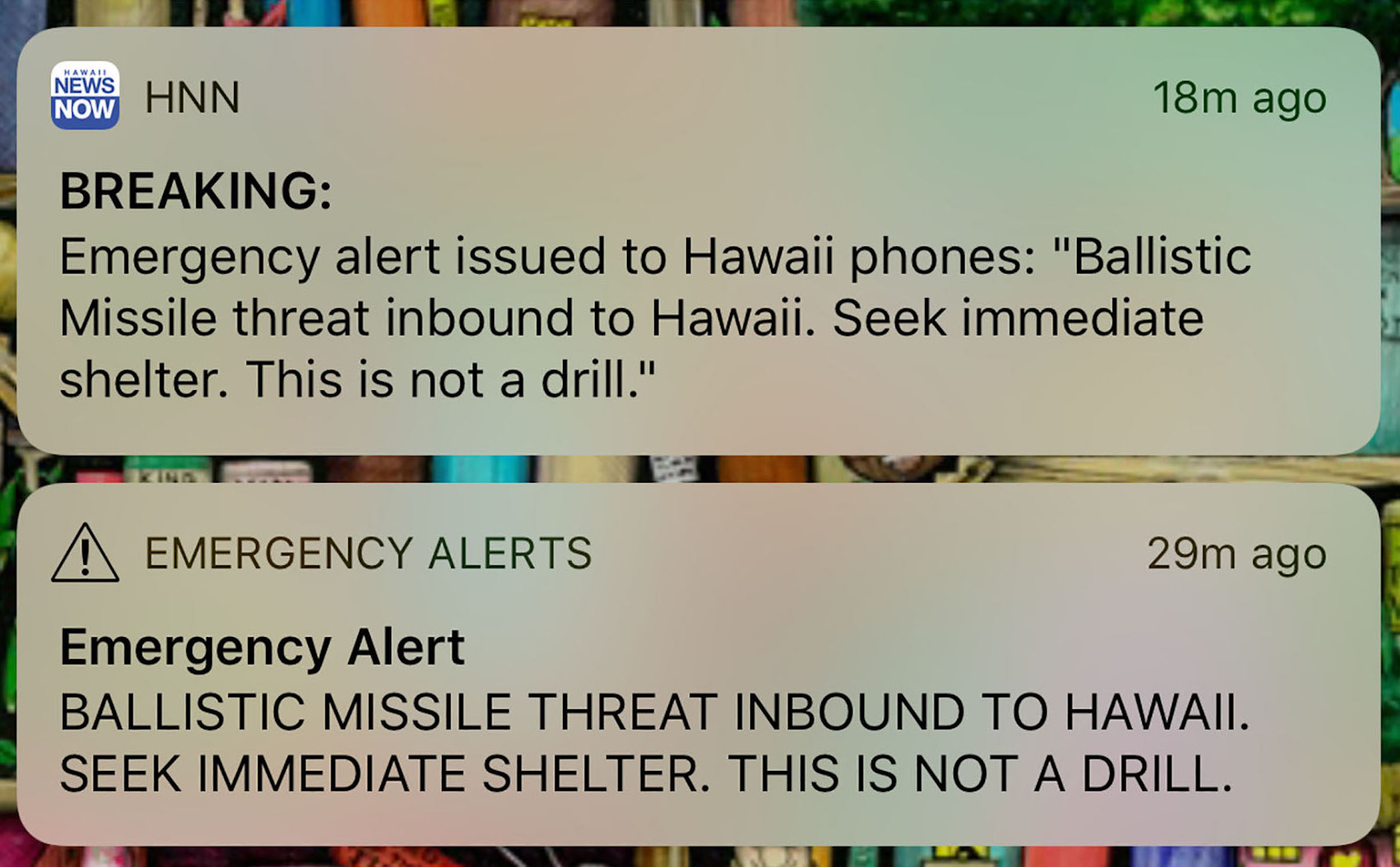
In 2018 the citizens of Hawaii were warned that a ballistic missile would strike the land or sea of the island in minutes. Everybody was told to get to shelter and prepare for the worst. This was during heightened tensions between the US and North Korea. People were alerted on their smartphones, radio, television and warning sirens. The message ended with a "this is not a drill". There were real consequences - people were calling their loved ones saying goodbye and preparing for what was about to come. 38 minutes later a second alert went out stating a "false alarm".
 
https://time.com/5102630/hawaii-false-missile-alert-procedures/ 
 
What went wrong? It turned out that the false alarm was caused by "poor computer software design" and "human factors". In the published screenshot of the computer software in question you can see the options nearly next to each other. Two different options with very different meanings, but similar wording on the same page so close to each other. It's not hard to imagine an overworked employee making this mistake.

https://www.hawaiinewsnow.com/story/37271628/officials-release-image-of-hiema-screen-that-triggered-incorrect-missile-alert/

In the days following an investigation was launched, and the state's emergency management administrator ended up resigning. However, this was not the first or last time this happened. Only 3 days later Japan had a similar incident. It wasn't even the last time for Hawaii. The next year another false alarm was sent out to the island of Oahu.

On a lighter note, Volvo has designed an emergency brake system. With the use of cameras and a radar, the system can detect an obstacle in the road and when the driver hasn't reacted to it, the system applies the emergency brakes. It first displays a warning, but when that isn't enough or when there is no time, the system activates.

https://www.volvotrucks.com/en-en/news-stories/magazine-online/2017/jul/tech-focus-emergency-brake.html
 
There's cases of this system saving lives. A video exists on YouTube where a child is seen running into the road. The child appears from behind a bus in front of the Volvo truck. With no time for the driver to react, the system activates saving the child from being run into by a truck.
 
https://www.youtube.com/watch?v=vI9EIjUx20I
 
A good design can save lives. Humans are prone to make mistakes and sometimes our lives are put into the hands of the design we create. Legislators are creating stricter regulations to keep us safer and the engineers are creating technologies to do just that. A designer should know how their creation will be used and what are the possible consequences.
 
Sources:
https://en.wikipedia.org/wiki/2018_Hawaii_false_missile_alert
https://www.washingtonpost.com/news/the-switch/wp/2018/01/30/heres-what-went-wrong-with-that-hawaii-missile-alert-the-fcc-says/
https://www.hawaiinewsnow.com/story/37271628/officials-release-image-of-hiema-screen-that-triggered-incorrect-missile-alert/
https://time.com/5102630/hawaii-false-missile-alert-procedures/
https://www.volvotrucks.com/en-en/news-stories/magazine-online/2017/jul/tech-focus-emergency-brake.html
https://www.youtube.com/watch?v=vI9EIjUx20I

Sunday, March 20, 2022

IT careers in Estonia (Week 8)

Some of us have been blessed to live in a country as digital, modern and advanced as Estonia. From e-voting to online public services, Estonia has been looked up to for years in this field, as other countries are actively trying to digitize their government nowadays as well.


But this hasn’t happened overnight. For example, in 2007, only 52% of households had an internet connection in Estonia, whereas in 2021, almost 92% homes had a stable connection. Also, our government has kept investing in the future. The annual state budget of 2021 had four different priorities and one of them focused on continuing investments for the future, especially in the digital area.


Source: https://taltech.ee/en/news/small-nations-ict-sector-intends-grow-tenfold-next-ten-years


This change has had an effect in the job market as well. Who would have thought at the start of the millennium that in twenty years we would be missing more that 40 000 workers just in the IT sector? Or that the employment growth will be enormously bigger than in other fields?

The development of IT has reflected in the workplace as well. About 20 years ago the field in Estonia was still developing, we lacked high-level experts, senior executives and quality programmers. We had way less opportunities for education and much of the labor was done by young enthusiasts, who had learned their skill themselves, instead of getting a degree in a university. Offices were older, with cheaper equipment and there weren’t any companies from Estonia making an impact on the world as we can see today.

Nowadays, being a qualified IT worker has a totally different sound to it. A high salary, benefits, freedom and a big knowledge base are automatically associated with you by others. Our workforce has diverse personnel, thanks to joining the European Union and multicultural hiring processes with remote work abilities. Many of the companies offer generous benefits packages, a very competent salary and growth opportunities while working. We have (but still not the needed amount) Estonian executives that have multiple degrees from here or abroad, skilled workers and highly-skilled programmers. Our offices are located in fancy buildings, filled with state of the art equipment and startups are actively being supported by foreign investments. Bolt and Transfer-Wise are some of the success stories that started with an idea and developed to worldwide phenomenons thanks to the support offered by our government and education, which has spread to major cities and has been integrated to primary- and high school education for younger pupils.

Surely, Estonia will still continue improvements in the area and hold the position of the most digitized government in the future. It’s just amazing to see what kind of change we have been through thanks to the efforts of everyone associated in the field. I hope that we can continue to help other states to reach such a level of competency as well.


Sources:

https://www.dw.com/en/e-government-estonia-leading-the-way/av-19119146
https://www.stat.ee/en/find-statistics/statistics-theme/technology-innovation-and-rd/information-and-communication
https://www.rahandusministeerium.ee/et/eesmargidtegevused/riigieelarve-ja-majandus/riigieelarve-ja-majandusulevaated
https://epl.delfi.ee/artikkel/94659915/liina-laas-it-spetsialistide-puudus-on-viinud-meie-majanduse-eduloo-noaterale
https://taltech.ee/en/news/small-nations-ict-sector-intends-grow-tenfold-next-ten-years

Sunday, March 6, 2022

How does Copyleft influence one's software choices? (Week 6)

Since the beginning of software development, we have seen the need for making sure that the software, programs, code and so on get sold, bought and distributed according to rules set by the owner(s). That’s where copyright came into play, allowing authors to protect their work from unauthorized copying or selling by third parties.

But what’s the case with open-source software? Is it under a copyright license, limiting everything that we know open-source for, or is it just uploaded code that anyone can do anything they please with? The answer lies in Copyleft, which is a great incentive for people to improve innovations.


In simple words, Copyleft is essentially copyright with different terms. It allows people to freely change and spread newer copies of a work without any legal issues. Most likely, it has the need to keep the state of the rights - meaning that when a free (as in freedom, not in monetary value) Copyleft-work was used to create a new project, the new project shall remain free to everyone as well.

But to be more specific, Copyleft licenses have three different grades:

No Copyleft - this type of license does not restrict any of the licensing on further copies/versions. It allows the developers to pretty much do anything with the work, but doesn’t give the end users any peace of mind that the further work will remain free and open-source.

A great example for this would be the BSD license, which imposes very minimal restrictions on the distribution of software. 

Weak Copyleft - this means that the further derived versions might not have the license, as it depends on how it was derived. This is the method used with software libraries, as the software can be linked with the library and further distributed without the new software needing a license. Some part of the code may remain closed-source or be released under a different license.

An example of weak Copyleft would be The Mozilla Public License (MPL), which can be described as a hybrid of the modified BSD license and the GPL license. It later got ruled as GPL-incompatible, and was relicensed. They are still using it for the Firefox web support.


Strong Copyleft - this is the Copyleft license that creates the need for developers to make their program fully available when redistributed to the public. That includes any components or libraries that might have been used.

The most popular example is definitely the GNU General Public License (GPL) that guarantees end users the ability to study, share, run and modify the software under this license. Their third version was released in 2007 with the final version of the license text. Many popular works use this license, like the Linux kernel, Git, Wordpress, MySQL and Notepad++.


Monday, February 28, 2022

Copyright legislation reform (Week 5)

Copyright law has been around since the invention of printing in the 15th century. Since then it has gone through many changes and iterations, however it hasn't completely adapted to the Digital Revolution of the last couple of decades. "The Case for Copyright Reform" by Rick Falkvinge and Christian Engström has some proposed changes to address this.

First of all they would like to keep the recognition of authors untouched. An author of a work should be recognized as such. This isn't a controversial statement and I agree with it. Secondly a change to non-commercial sharing of copyrighted materials is proposed. They say that only commercial sharing should be regulated. I wouldn't agree with this point if they hadn't made another point about privacy earlier. Namely you wouldn't be able to determine if something being shared was protected by copyright without spying on the conversations of users. Therefore, you couldn't enforce this and keep the privacy of the users.

Next, the time that copyright is in use for a given media should be shortened from the life of the author plus 70 years to 20 years after publication. Clearly another good proposition since currently, by the time the copyright expires for an author's works, that author is probably forgotten by most people. How many authors can you remember that have passed over 70 years ago? How many works of them can you name and how much is the public and investors interested in them. This change has to be made.

An improved system for finding authors of any works is proposed. Since it's common for works not to have authors connected to them, making finding authors sometimes impossible. This would give new life to works that otherwise couldn't be used, thus making this another excellent proposition that I agree with.

I can't really relate to the point about sampling. The authors say that sampling, remixing or in other ways reusing a work should be completely allowed. I would say that it is better to be original than to reuse material, I understand that sampling has a place. However it is the authors' opinions that it should be completely allowed without asking for permission. I believe that with the new system for discovering authors that was proposed you can easily discover any given author and ask for permission that way.

Finally a ban on DRM is proposed. I wholeheartedly agree with this one. DRM has only hurt legitimate users by ruining their experience. Usually an illegitimate copy of a work with DRM removed can give a better experience than something legitimate. DRM is a terrible technology that only gives headaches to end users and should be banned as the authors state.


Sources:

http://falkvinge.net/wp-content/uploads/large/The%20Case%20For%20Copyright%20Reform%20(2012)%20Engstrom-Falkvinge.pdf

https://en.wikipedia.org/wiki/Copyright

https://en.wikipedia.org/wiki/Digital_Revolution

Stephen Hawkings success as a disabled scientist (Week 14)

Stephen Hawking was an Englishman born in 1942. He was a great physicist, scientist and author among other professions. He graduated from th...