https://www.volvotrucks.com/en-en/news-stories/magazine-online/2017/jul/tech-focus-emergency-brake.html
Monday, March 28, 2022
Usability in IT with real consequences (Week 9)
https://www.volvotrucks.com/en-en/news-stories/magazine-online/2017/jul/tech-focus-emergency-brake.html
Sunday, March 20, 2022
IT careers in Estonia (Week 8)
Some of us have been blessed to live in a country as digital, modern and advanced as Estonia. From e-voting to online public services, Estonia has been looked up to for years in this field, as other countries are actively trying to digitize their government nowadays as well.
But this hasn’t happened overnight. For example, in 2007, only 52% of households had an internet connection in Estonia, whereas in 2021, almost 92% homes had a stable connection. Also, our government has kept investing in the future. The annual state budget of 2021 had four different priorities and one of them focused on continuing investments for the future, especially in the digital area.
Source: https://taltech.ee/en/news/small-nations-ict-sector-intends-grow-tenfold-next-ten-years
This change has had an effect in the job market as well. Who would have thought at the start of the millennium that in twenty years we would be missing more that 40 000 workers just in the IT sector? Or that the employment growth will be enormously bigger than in other fields?
The development of IT has reflected in the workplace as well. About 20 years ago the field in Estonia was still developing, we lacked high-level experts, senior executives and quality programmers. We had way less opportunities for education and much of the labor was done by young enthusiasts, who had learned their skill themselves, instead of getting a degree in a university. Offices were older, with cheaper equipment and there weren’t any companies from Estonia making an impact on the world as we can see today.
Nowadays, being a qualified IT worker has a totally different sound to it. A high salary, benefits, freedom and a big knowledge base are automatically associated with you by others. Our workforce has diverse personnel, thanks to joining the European Union and multicultural hiring processes with remote work abilities. Many of the companies offer generous benefits packages, a very competent salary and growth opportunities while working. We have (but still not the needed amount) Estonian executives that have multiple degrees from here or abroad, skilled workers and highly-skilled programmers. Our offices are located in fancy buildings, filled with state of the art equipment and startups are actively being supported by foreign investments. Bolt and Transfer-Wise are some of the success stories that started with an idea and developed to worldwide phenomenons thanks to the support offered by our government and education, which has spread to major cities and has been integrated to primary- and high school education for younger pupils.
Surely, Estonia will still continue improvements in the area and hold the position of the most digitized government in the future. It’s just amazing to see what kind of change we have been through thanks to the efforts of everyone associated in the field. I hope that we can continue to help other states to reach such a level of competency as well.
Sources:
https://www.dw.com/en/e-government-estonia-leading-the-way/av-19119146
https://www.stat.ee/en/find-statistics/statistics-theme/technology-innovation-and-rd/information-and-communication
https://www.rahandusministeerium.ee/et/eesmargidtegevused/riigieelarve-ja-majandus/riigieelarve-ja-majandusulevaated
https://epl.delfi.ee/artikkel/94659915/liina-laas-it-spetsialistide-puudus-on-viinud-meie-majanduse-eduloo-noaterale
https://taltech.ee/en/news/small-nations-ict-sector-intends-grow-tenfold-next-ten-years
Sunday, March 6, 2022
How does Copyleft influence one's software choices? (Week 6)
Since the beginning of software development, we have seen the need for making sure that the software, programs, code and so on get sold, bought and distributed according to rules set by the owner(s). That’s where copyright came into play, allowing authors to protect their work from unauthorized copying or selling by third parties.
But what’s the case with open-source software? Is it under a copyright license, limiting everything that we know open-source for, or is it just uploaded code that anyone can do anything they please with? The answer lies in Copyleft, which is a great incentive for people to improve innovations.
In simple words, Copyleft is essentially copyright with different terms. It allows people to freely change and spread newer copies of a work without any legal issues. Most likely, it has the need to keep the state of the rights - meaning that when a free (as in freedom, not in monetary value) Copyleft-work was used to create a new project, the new project shall remain free to everyone as well.
But to be more specific, Copyleft licenses have three different grades:
No Copyleft - this type of license does not restrict any of the licensing on further copies/versions. It allows the developers to pretty much do anything with the work, but doesn’t give the end users any peace of mind that the further work will remain free and open-source.
A great example for this would be the BSD license, which imposes very minimal restrictions on the distribution of software.
Weak Copyleft - this means that the further derived versions might not have the license, as it depends on how it was derived. This is the method used with software libraries, as the software can be linked with the library and further distributed without the new software needing a license. Some part of the code may remain closed-source or be released under a different license.
An example of weak Copyleft would be The Mozilla Public License (MPL), which can be described as a hybrid of the modified BSD license and the GPL license. It later got ruled as GPL-incompatible, and was relicensed. They are still using it for the Firefox web support.
Strong Copyleft - this is the Copyleft license that creates the need for developers to make their program fully available when redistributed to the public. That includes any components or libraries that might have been used.
The most popular example is definitely the GNU General Public License (GPL) that guarantees end users the ability to study, share, run and modify the software under this license. Their third version was released in 2007 with the final version of the license text. Many popular works use this license, like the Linux kernel, Git, Wordpress, MySQL and Notepad++.
Stephen Hawkings success as a disabled scientist (Week 14)
Stephen Hawking was an Englishman born in 1942. He was a great physicist, scientist and author among other professions. He graduated from th...
-
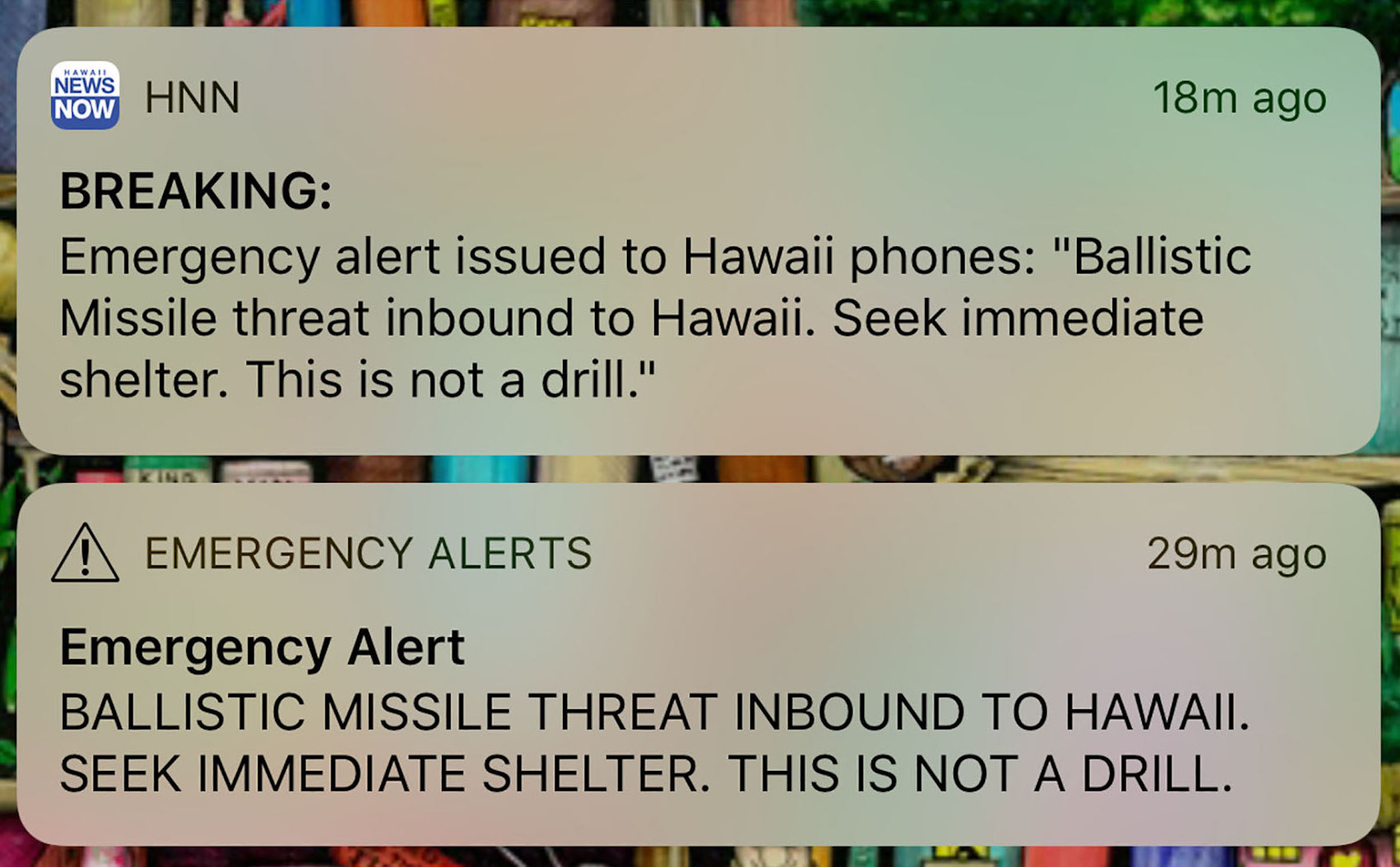
In 2018 the citizens of Hawaii were warned that a ballistic missile would strike the land or sea of the island in minutes. Everybody was tol...
-
Gentoo is a Linux distribution aimed at advanced users. The biggest advantage of Gentoo is that instead of downloading pre-built binaries fr...
-
Copyright law has been around since the invention of printing in the 15th century. Since then it has gone through many changes and iteration...
/cloudfront-us-east-1.images.arcpublishing.com/gray/S5NCANLQXRBBFACUY4EW4T7BEY.jpg)